PE/VC · Investment committee memo

Your investment memo, in one prompt.

Upload a company's numbers and contracts. Get a detailed memo with revenue, growth, burn, runway, and the gaps to dig into. All in minutes.

No credit card needed · Make a similar deck in 5 minutes

Coreworks
Tessera Investment Memo
Generated in 4 min
5-6
iterations
per memo
3
data sources
combined
~4min
build time
with coreworks
6hrs
saved
each cycle
01THE DATA

Start with the
data room you already have.

Drop in the company's numbers
and contracts — no setup required.

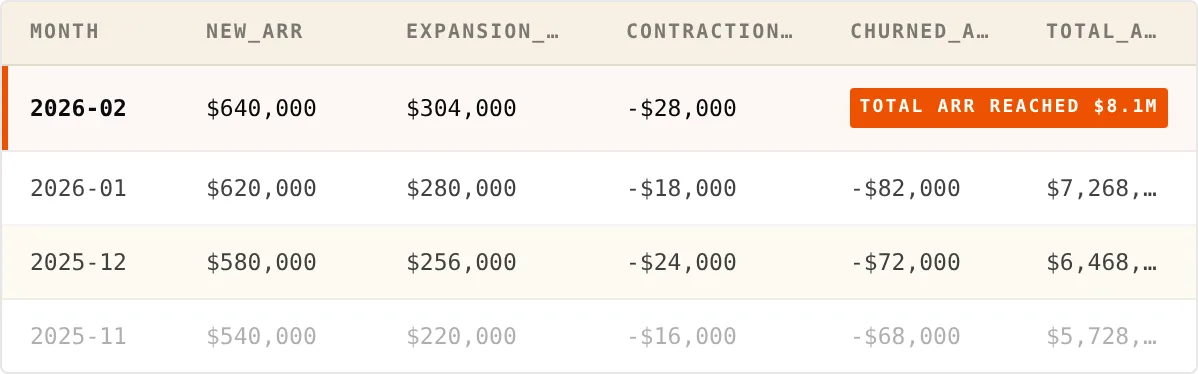
Financial Metrics table preview
Showing 4 of 36 rows · 01_Financial_Metrics.csv

Which fields become which slide

revenue+growth+margin+burn+runway

Executive Summarythe snapshot

contract+deal size

Product & Customerscustomer concentration

sector

Market Size & Timingmarket framing

competitor+deal count

Competitive Landscapewho you're up against

net new revenue+monthly burn

Traction Dashboardis efficiency improving

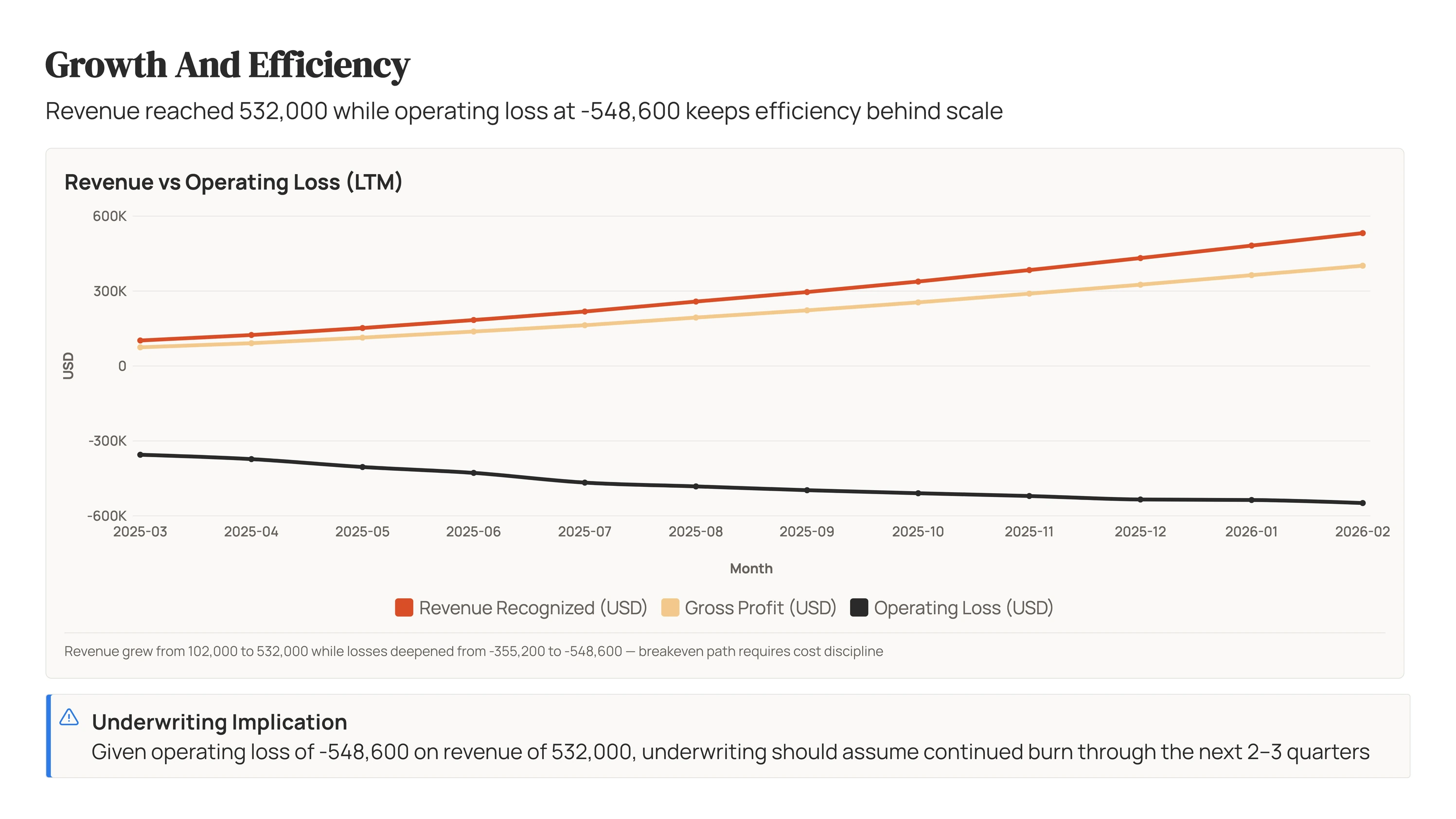
revenuevsoperating loss

Growth & Efficiencypath to breakeven

sales+R&D+admin

Operating Expenseswhere the money goes

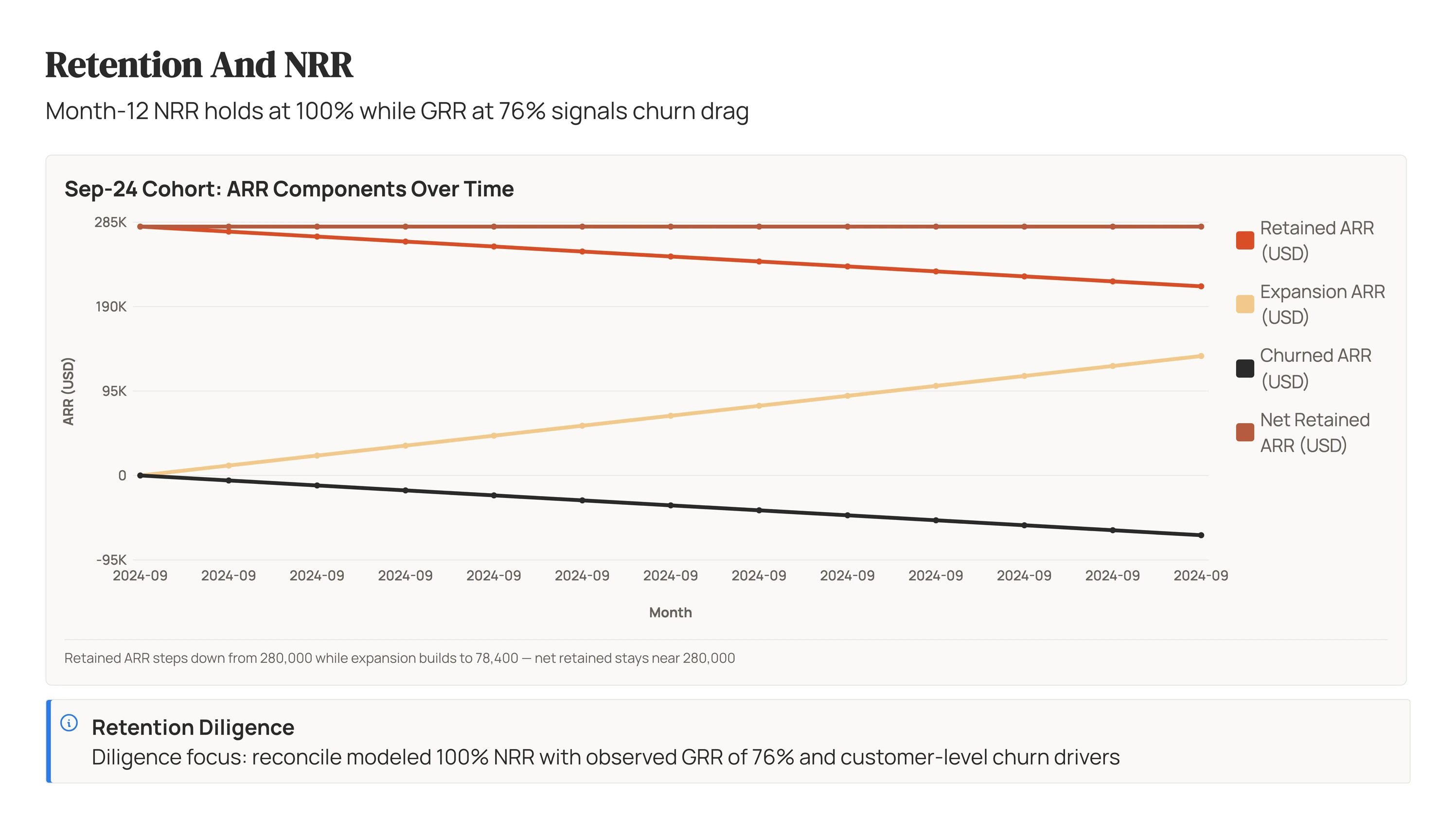
kept+added+lost revenue

Retention & NRRare customers sticking

[ 02 ]THE PROMPT

One line does the
heavy lifting.

Hover each orange chip to see what
that part of the prompt does.

The prompt tells Coreworks who this memo is for, what to lead with, and which gaps to flag. Here's what each part is doing.

Prompt used

Draft an . It's for the — built for scrutiny, not a sales pitch. : $8.1M revenue at 75.2% margin, but $596K burn leaves only . Flag the — no usage data, and . End each section with what to check. Keep the tone neutral.

03THE INSIGHTS

It reads the data
before it builds a slide.

Each thing it spots
shapes one slide.

Coreworks looks over the combined numbers, contracts, and customer data first. Here's what it flags — and what each flag turns into.

Retention And NRR slide
Risk

Coreworks checks each assumption against the actual data.

The model assumes 100% retention, but the real customer data runs at 76% — a 24-point gap that expansion was hiding, which Coreworks flags as the key thing to verify.

Creates a closing slide, with a “reconcile the assumed vs actual number” flag i.e. the one assumption most likely to change the decision.
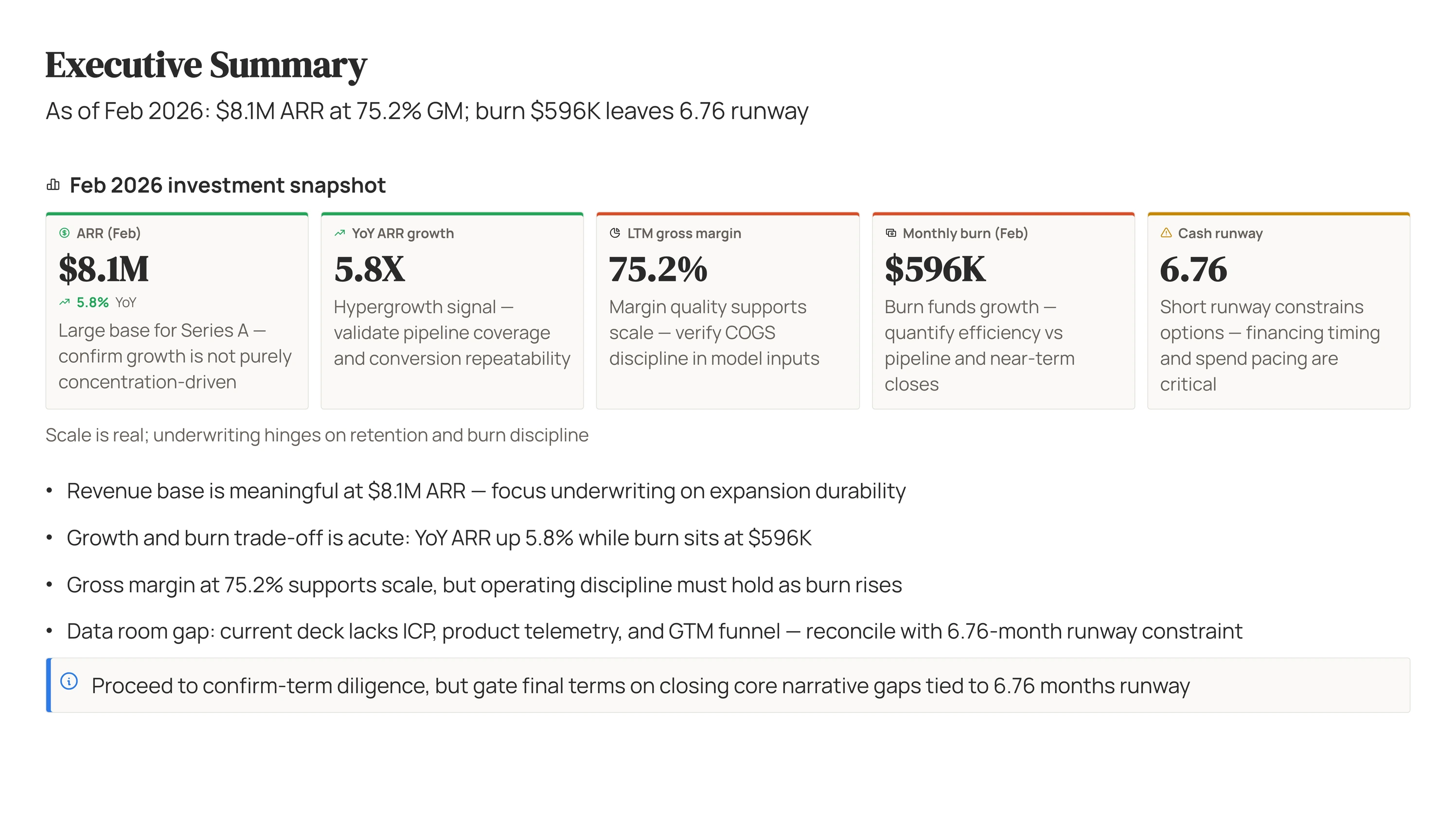
Executive Summary slide
Risk

Coreworks pairs growth and margin against monthly burn to work out runway.

$8.1M revenue and 75.2% margins look strong, but $596K monthly burn leaves only 6.76 months of cash — so Coreworks frames the runway as the deciding tension.

Adds a snapshot, with a “hold final terms until the runway question is settled” note.

Product And Customers slide
Anomaly

Coreworks plots the contract sizes to see how spread out they are.

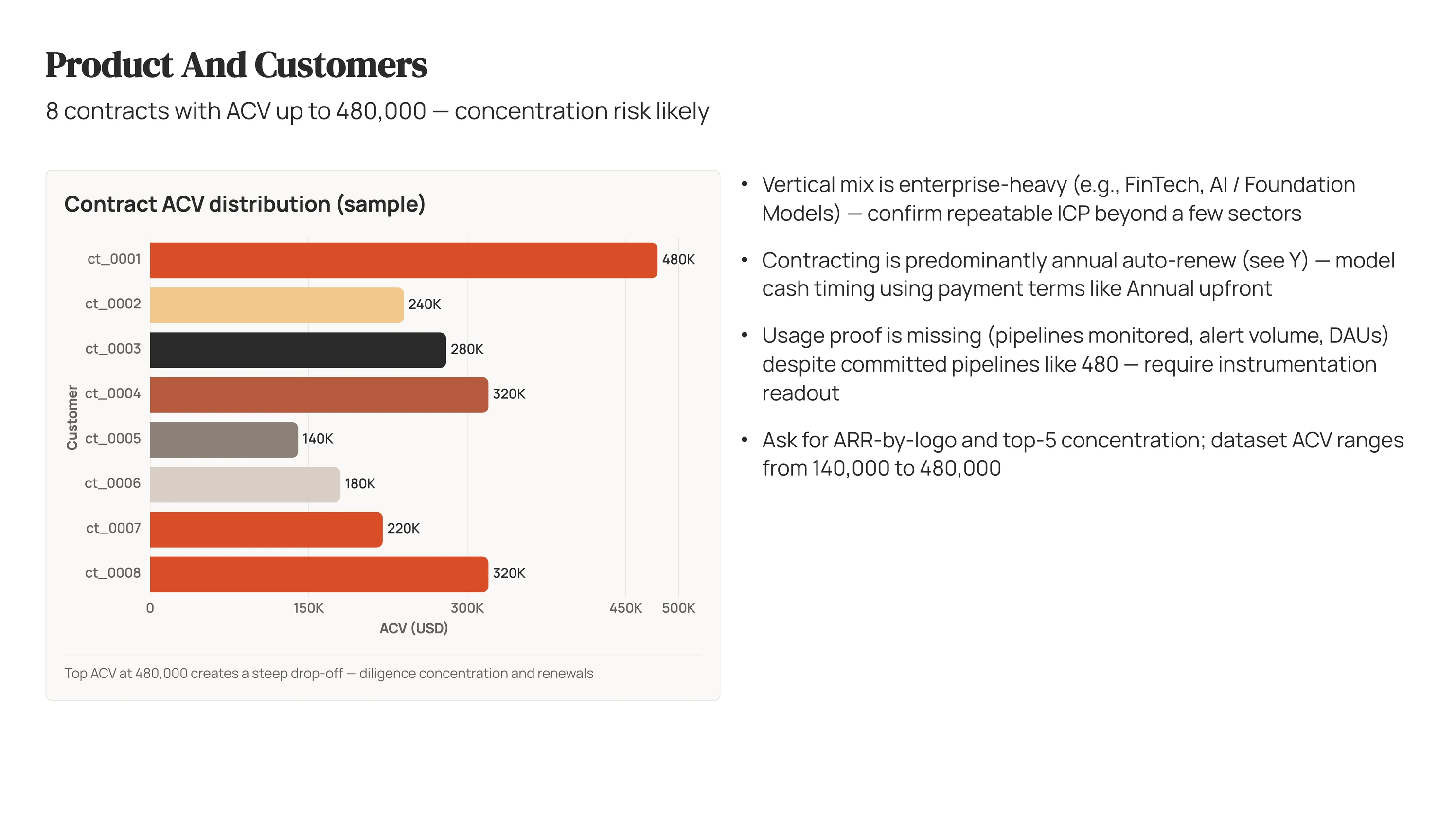
Across 8 contracts ($140K–$480K) one is far larger than the rest, so Coreworks flags customer concentration — and notes there's no usage data to offset it.

Creates a customer chart, with an “ask for revenue by customer and top-5 concentration” flag.

Growth And Efficiency slide
Trend

Coreworks tracks revenue against losses over time and breaks down the costs.

Revenue of $532K still trails a $548,600 loss, with sales and R&D eating 90%+ of costs, so Coreworks concludes breakeven is several quarters away.

Becomes the efficiency slide, telling the memo to assume burn continues for 2–3 more quarters.

04THE NARRATIVE

How the story is
designed to land.

The order
is the argument.

The prompt told Coreworks to open on the trade-off, then work through the case, and end on the riskiest assumption. Here's why that order works.

Slide 02

Open on the trade-off.

The committee needs the main tension — strong revenue and margin against short runway — before anything else.

Slides 03–04

Who buys, and how big.

Customer concentration and market size come next, with the market gap flagged honestly so the memo doesn't overstate it.

Slides 05–06

Competition, then moat.

Show who you're up against before making the case for what's defensible, so the argument is grounded in real deals.

Slides 07–09

The numbers that decide it.

Traction, breakeven path, and cost structure sit together: is efficiency improving, when does it break even, and where does the money go.

Slide 10

End on the riskiest assumption.

Retention closes the memo because the 100%-vs-76% gap is the thing most likely to change the call.

05EARLY USERS

Memos that used to take two days
now take an upload.

Real funds, real diligence,
same template.

★★★★★

"It found the retention gap on its own. That's exactly the thing we'd have spent a day chasing — and it was on slide ten before the meeting."

AD
Anika DesaiPrincipal · Growth Equity
★★★★★

"Every number tied back to the data room. When the partner pushed on runway, I showed the math instead of defending a slide."

TB
Tom BradleyInvestment Associate · VC
★★★★★

"We run dozens of memos a quarter, and they were never consistent. Now every deal lands in the same shape, with the gaps named up front."

RK
Rachel KimHead of Platform · Early-Stage Fund

— ready when you are —

Build your own
Investment Memo

Use the same prompt, upload the company's numbers and contracts, and get a memo your committee can read.

Start for free

No credit card needed · Make a similar deck in 5 minutes